Piece details
Vitrine Art déco en bubinga à médaillon ajouré, vers 1920
Le bois parle d'abord, un brun rouge profond que parcourent des moirures et des flammes plus sombres, surtout sur le panneau du bas où le fil ondoie comme une eau. Au-dessus, la vitrine s'allège en verre sur trois faces, avec une tablette et un dessus de verre qui laissent passer le jour. Les montants arrondis descendent en pieds fuselés. Au centre du soubassement, un médaillon argenté, ajouré de cercles, apporte au meuble sa seule note de métal.
Le bubinga, ou Guibourtia, vient d'Afrique équatoriale, et son bois brun rougeâtre à reflets d'acajou est employé en ébénisterie de luxe, en marqueterie et en lutherie. L'Art déco, né à Paris dans les années 1910, tire son nom de l'Exposition internationale des arts décoratifs de 1925 et affectionne les essences exotiques comme les formes géométriques. Datée vers 1920, cette vitrine se place entre ces deux repères. La galerie la dit en bois massif, sans préciser si le bubinga est employé en placage, et ne cite aucun ébéniste.
- Époque
- Vers 1920
- Matière
- Bubinga, bois massif
- Style
- Art déco
- Dimensions
- l. 70 × h. 146 × p. 35 cm
- État
- Bon état
Read in English
The wood speaks first, a deep reddish brown crossed by moiré and darker flames, above all on the lower panel where the grain ripples like water. Above, the cabinet lightens into glass on three sides, with a shelf and a glass top that let the daylight through. The rounded uprights descend into tapering legs. At the centre of the base, a silvered medallion pierced with circles brings the only note of metal to the piece.
Bubinga, or Guibourtia, comes from equatorial Africa, and its reddish-brown wood with mahogany reflections is used in luxury cabinetmaking, marquetry and instrument making. Art Deco, born in Paris in the 1910s, takes its name from the International Exhibition of Decorative Arts of 1925 and favours exotic woods as much as geometric forms. Dated around 1920, this cabinet sits between those two markers. The gallery describes it as solid wood, without saying whether the bubinga is used as veneer, and names no cabinetmaker.
Sources
- Le bubinga, Guibourtia, est un bois d'Afrique équatoriale, brun rougeâtre à reflets d'acajou, employé en ébénisterie de luxe, marqueterie, lutherie. https://www.atibt.org/fr/resources/456/bubinga ; https://en.wikipedia.org/wiki/Guibourtia
- Le nom Art déco vient de l'Exposition internationale des arts décoratifs et industriels modernes de Paris, 1925 ; le style naît à Paris dans les années 1910 et emploie bois exotiques, laque et formes géométriques. https://en.wikipedia.org/wiki/Art_Deco
Condition & restoration
- Stated condition
- Good condition
Creator & attribution
- Attribution
- Designation and attribution published by Galerie des Minimes; independent validation not performed.
- Reference
- patricia-1731650
Dimensions & materials
- Height
- 146 cm
- Width
- 70 cm
- Depth
- 35 cm
- Materials
- Solid wood
- Stated period
- 1901–1920
- Style
- Art Deco
Lefèvre Gabaïeff
An identified dealer on Collector’s Reserve. Questions, negotiation and purchase all go through the platform, so the context of the piece is never lost.
Visit the dealer’s pageProtection suited to the piece
Specialized packaging, handling, and delivery, tailored to each piece.
You choose at the time of purchase: you arrange the transport yourself, or you request a delivery quote. Everything is displayed before payment.
Understanding specialized transportIn the same spirit
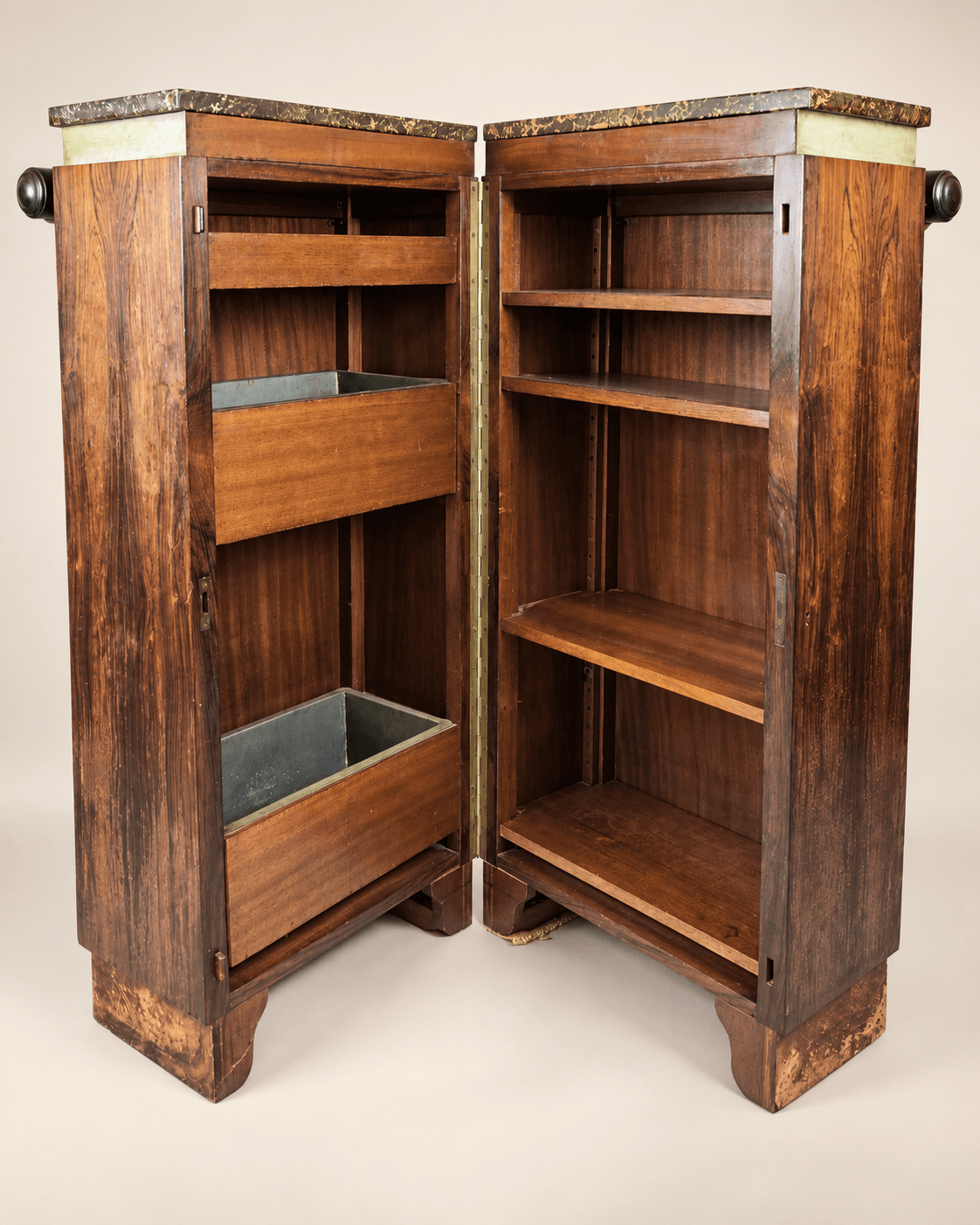
Art Deco bar, circa 1940
1 800 €
Same style
Porte-parapluies
1 400 €
Same style
Mid-Century Chest of Drawers with Compartiments, Italy, 1970s
Sur demande
Same material
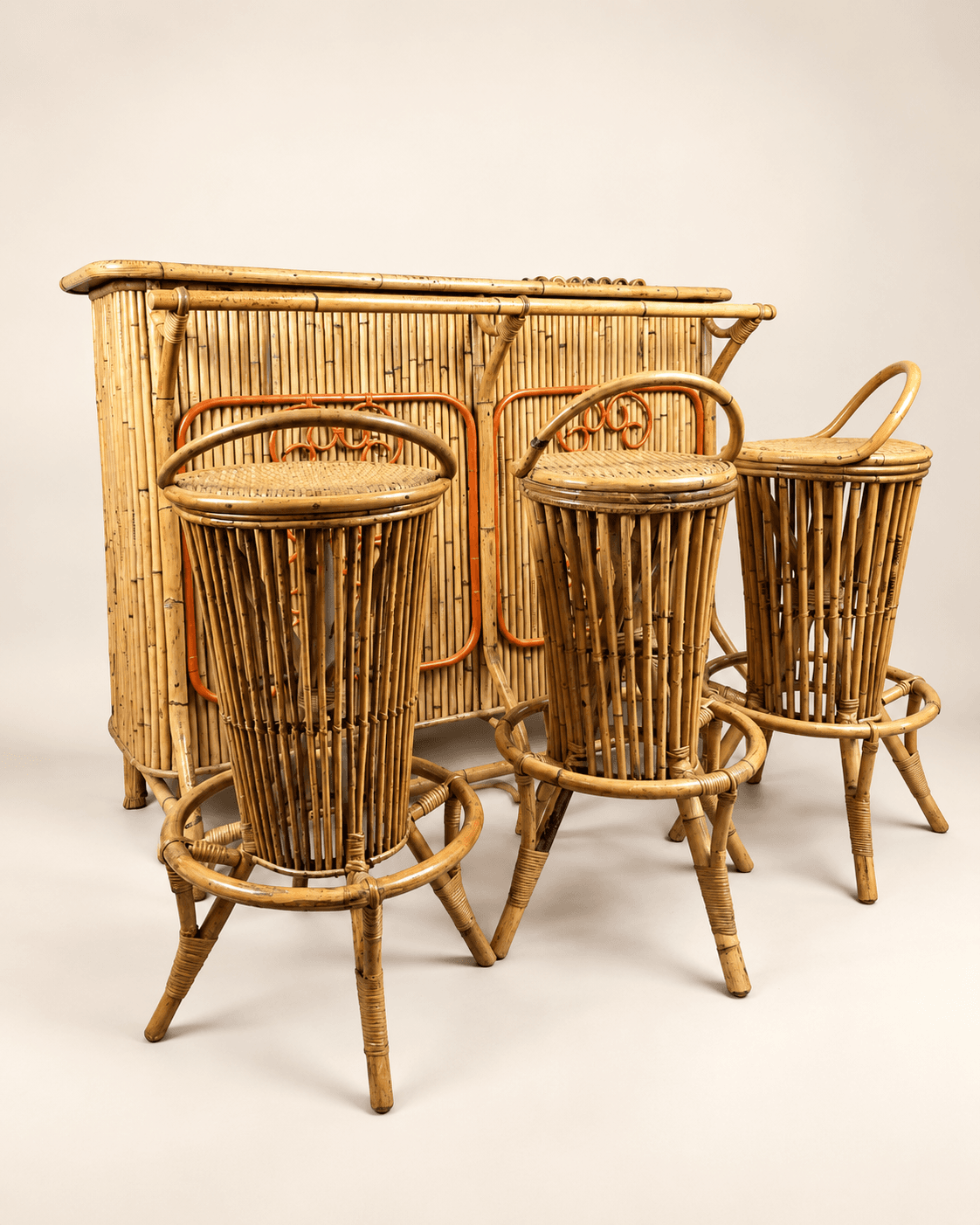
Attributed to Tito Agnoli, bamboo and rattan bar, and its 3 matching stools, Italy circa 1950
3 200 €
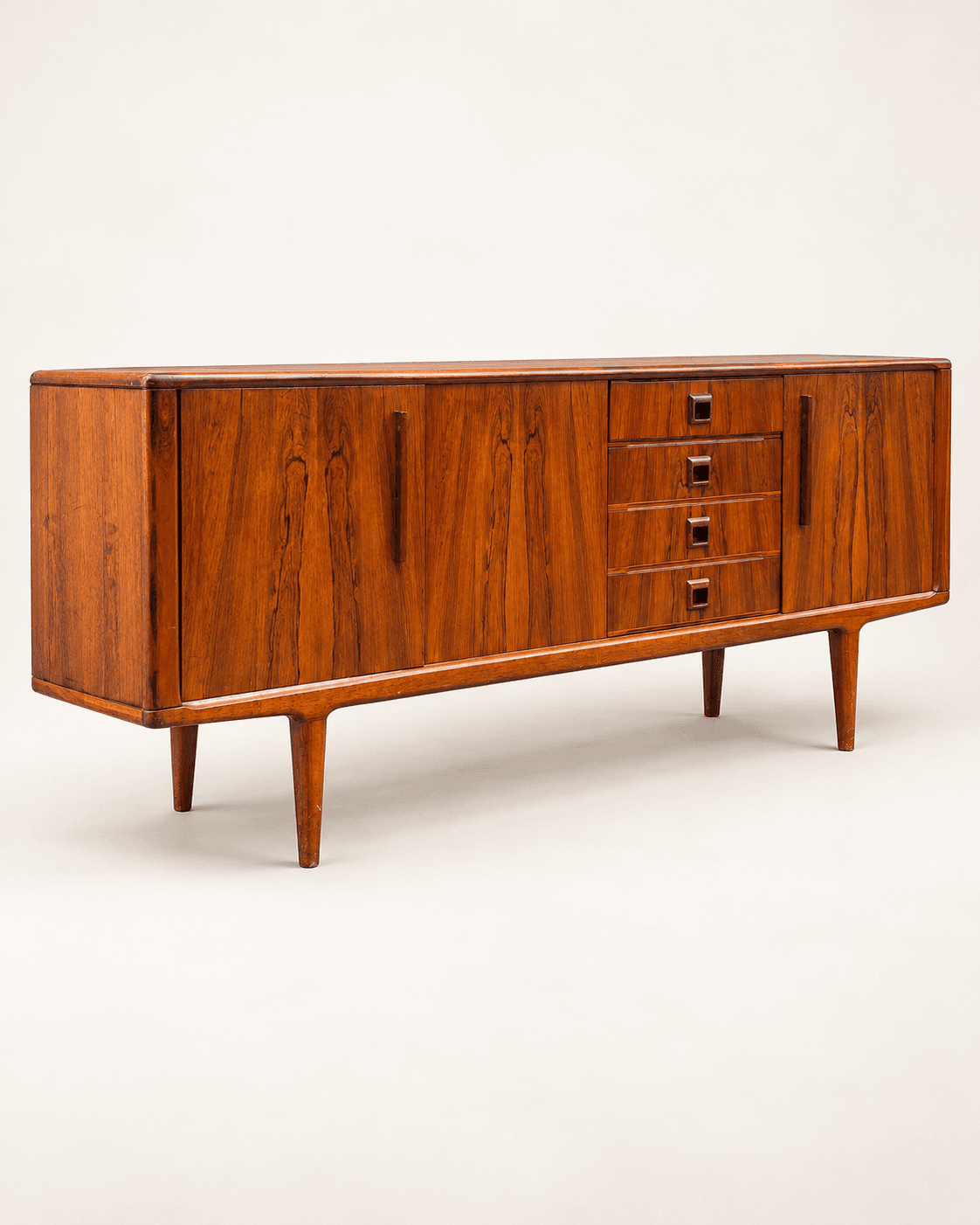
Scandinavian teak sideboard, 1960s
2 450 €
Gabriel Viardot ( dans le goût de), cabinet de présentation en bois teinté,
1 400 €
Bar by Aldo Tura, 1960’s
2 400 €
Walnut arbalète commode, France 18th c.
3 900 €
Large black sideboard by Florence Knoll, 1970’s
4 800 €
3 000 €
Buy this piece